Well, I've done all I can. Move is published and as I wait for it to come through the various sales platforms there's not much left for me to do, except wait. I really can't do much until it's at least posted on Amazon, so ...
I need a break. And thank goodness I have the day off for President's Day today and can have it!
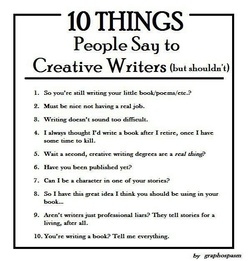
You know, there are a lot of stereotypes about writer's out there, none of which are true. For example, people assume we're rich. Oh, how I wish that were so. The truth is, the J.K. Rowlings and Steven Kings of the world are the exception rather than the rule. Most writers are writing their novels around home life and a full time job. Did you know that C.S. Lewis and J.R.R. Tolkein never quit their day jobs as professors? Nope, they wrote their books while working full time. It makes me feel better to know that even great writers of the past had to do it the same way I am - juggling the writing with the rest of life. Others are retired from other careers and can now write full time because they've "done their time," like P.D. James. So there's not big money in writing and even if there were enough money in it, you can't get a loan with only royalty payments coming in. Creditors want to see a steady income, a guaranteed paycheck. Plus there are other nuisances like insurance and retirement that you have to consider. So no, we aren't rich. In fact, it behooves us to have a steady job because life in the 21st century isn't friendly to the freelance lifestyle.
Another stereotype is that writing is easy. Oh, don't I wish. While story ideas do come to us easily, pulling them off is a trick. You have to make things believable, at least in theory, or readers will let you know in full surround sound stereo that "this couldn't possibly happen!" And then there go your book sales. I spent 6 months researching Splinter before I wrote the first word for National Novel Writing Month in 2010, and still had to do follow up research for rewrites and edits in later drafts. Likewise with Move - I researched and planned that novel for about 3 months before I started writing, and in fact was still doing some research as I wrote it. I had to diagram out Anywhere But Here to keep the parallel storylines straight, which was a challenge that gave me plenty of headaches. And I found myself running around and doing plenty of checking and researching while working on every draft of Blurry. I thought writing fiction would be less research than writing non-fiction, but honestly I think it's 6 of one and half a dozen of the other when it comes to research. You have to do it. You also have to keep going through to make sure you're maintaining consistency, which is an issue with anything you write. Add to that the fact that you're squeezing in writing with a full life, and no, it isn't easy. I'm lucky to have 2 hours a day to devote to writing. That's my absolute maximum, and I can't even have it every day because there are still chores, errands, home care, self care, husband care, and bird care that must be attended to. Life doesn't stop because you're writing a novel. It plugs right along, and it's very persistent in reminding you that it's there and needs tending to. Honestly, I don't know how people with children can do this, but plenty do. Where there's a will, there's a way. I make the best of my 2 hours when I get it, and I suppose they must know what blocks of time they have and how to handle them.
And the last stereotype is one that greatly amuses me. People think we lounge around the house in our pajamas, sipping coffee (or tea) and typing great prose all day. Well from the truths shared above, I think you see how that's impossible. My boss wouldn't be very happy if I lived like that because I am supposed to report to the office on Monday - Friday. My birds might like that if I took frequent play and feeding breaks, but after a while they tend to get screamy and want mommy to pay attention to them. I believe my husband and family would object to a hermit lifestyle. And even on weekends, there's always something that needs doing. Homes and cars need care and maintenance. It's like the joke running around on social media about Sunday being a day of rest - rest of the chores, rest of the errands, rest of the stuff I didn't get done Monday - Saturday! True. So true.
No, it's not easy being a writer, nor is it glamerous. There have been plenty of times when I asked myself if it's worth it to invest so much into shoving this into my life, but the answer always comes back to yes. I love writing and being an author has been a lifelong dream. And while it might not live up to the nice stereotypes, it's still worth it to have my work out there for readers to enjoy. The purpose of writing is to create stories that entertain and inspire people. The Lord has gifted me with these stories and I don't want to bury my talent. I want to share it with the world.
And yes, the work is worth it.
That's all today. Take care. I hope you have a great day. Enjoy the day if you're off. I need to get out there in the world and take care of all that stuff that piled up while I was working on getting Move published. The world is out there, and it's time I got engaged in it again.
Bye!
I need a break. And thank goodness I have the day off for President's Day today and can have it!
You know, there are a lot of stereotypes about writer's out there, none of which are true. For example, people assume we're rich. Oh, how I wish that were so. The truth is, the J.K. Rowlings and Steven Kings of the world are the exception rather than the rule. Most writers are writing their novels around home life and a full time job. Did you know that C.S. Lewis and J.R.R. Tolkein never quit their day jobs as professors? Nope, they wrote their books while working full time. It makes me feel better to know that even great writers of the past had to do it the same way I am - juggling the writing with the rest of life. Others are retired from other careers and can now write full time because they've "done their time," like P.D. James. So there's not big money in writing and even if there were enough money in it, you can't get a loan with only royalty payments coming in. Creditors want to see a steady income, a guaranteed paycheck. Plus there are other nuisances like insurance and retirement that you have to consider. So no, we aren't rich. In fact, it behooves us to have a steady job because life in the 21st century isn't friendly to the freelance lifestyle.
Another stereotype is that writing is easy. Oh, don't I wish. While story ideas do come to us easily, pulling them off is a trick. You have to make things believable, at least in theory, or readers will let you know in full surround sound stereo that "this couldn't possibly happen!" And then there go your book sales. I spent 6 months researching Splinter before I wrote the first word for National Novel Writing Month in 2010, and still had to do follow up research for rewrites and edits in later drafts. Likewise with Move - I researched and planned that novel for about 3 months before I started writing, and in fact was still doing some research as I wrote it. I had to diagram out Anywhere But Here to keep the parallel storylines straight, which was a challenge that gave me plenty of headaches. And I found myself running around and doing plenty of checking and researching while working on every draft of Blurry. I thought writing fiction would be less research than writing non-fiction, but honestly I think it's 6 of one and half a dozen of the other when it comes to research. You have to do it. You also have to keep going through to make sure you're maintaining consistency, which is an issue with anything you write. Add to that the fact that you're squeezing in writing with a full life, and no, it isn't easy. I'm lucky to have 2 hours a day to devote to writing. That's my absolute maximum, and I can't even have it every day because there are still chores, errands, home care, self care, husband care, and bird care that must be attended to. Life doesn't stop because you're writing a novel. It plugs right along, and it's very persistent in reminding you that it's there and needs tending to. Honestly, I don't know how people with children can do this, but plenty do. Where there's a will, there's a way. I make the best of my 2 hours when I get it, and I suppose they must know what blocks of time they have and how to handle them.
And the last stereotype is one that greatly amuses me. People think we lounge around the house in our pajamas, sipping coffee (or tea) and typing great prose all day. Well from the truths shared above, I think you see how that's impossible. My boss wouldn't be very happy if I lived like that because I am supposed to report to the office on Monday - Friday. My birds might like that if I took frequent play and feeding breaks, but after a while they tend to get screamy and want mommy to pay attention to them. I believe my husband and family would object to a hermit lifestyle. And even on weekends, there's always something that needs doing. Homes and cars need care and maintenance. It's like the joke running around on social media about Sunday being a day of rest - rest of the chores, rest of the errands, rest of the stuff I didn't get done Monday - Saturday! True. So true.
No, it's not easy being a writer, nor is it glamerous. There have been plenty of times when I asked myself if it's worth it to invest so much into shoving this into my life, but the answer always comes back to yes. I love writing and being an author has been a lifelong dream. And while it might not live up to the nice stereotypes, it's still worth it to have my work out there for readers to enjoy. The purpose of writing is to create stories that entertain and inspire people. The Lord has gifted me with these stories and I don't want to bury my talent. I want to share it with the world.
And yes, the work is worth it.
That's all today. Take care. I hope you have a great day. Enjoy the day if you're off. I need to get out there in the world and take care of all that stuff that piled up while I was working on getting Move published. The world is out there, and it's time I got engaged in it again.
Bye!

 RSS Feed