And I say let it die. The more agonizing it's demise, the better. I know a lot of people had a magnificent year, and for them I'm happy, but for me it was a bag full of crap. I shall escort this year out with my foot, if necessary. Come midnight, it WILL leave.
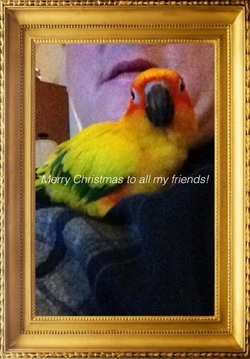
But before that, let me pause to wish our male sun conure, Zacchaeus (Zack), a very happy birthday! Our little sunshine is 14 today! And before the obligatory "good Lord!" flies, conures can live up to 30 years. So this little ball of energy isn't even middle aged yet, and he doesn't feel (or act) a day over 2. Happy birthday, sunshine! We love you!
Of course, Zack's birthday is New Year's Eve, which is a day people typically think about the year past and resolve on how to do better next year. This is something I've been considering for a while. You know 2013 was a tough year for me if you've been following this blog, and yesterday's Facebook post that the anger and depression circling me has to go is probably no surprise to most of you. But the question remains, how did it get to be this way? And to discover that, I have to take a look in the mirror and consider two things: what did I do wrong to backslide, and what have I done right that I can build on?
I think the cause is simple: there was a lot of change in 2013, and I was overwhelmed by it. I just didn't realize it at the time. I had the attitude that "I've faced worse, so this is nothing," but that wasn't necessarily true. I wasn't honest with myself or with others. Honestly, I was as scared as everybody else by everything shifting around me. I put on a brave face, but perhaps, I should have sat down for a moment and considered that, no matter what I've seen and what I've experienced (whether better or worse), I really wasn't as boldly confident in facing things as I acted. In other words, I underestimated myself. So one lesson learned in 2013: you can slay the dragon, and still die from a wasp sting, so to speak. Facing down bit monsters and getting around huge mountains doesn't guarantee that you've got the smaller stuff whipped. In fact, you may still be reeling from those big battles so much that you don't have as much left in you to face them the way you faced things last time. So there was the pitfall. I was too confident and not honest with myself. lesson learned.
As for the anger and depression thing, well, with change around every corner it's natural to wonder "how's life going to punch me in the stomach today?" but I don't have to accept that. I don't have to be a victim of circumstance, or of other peoples' decisions. I need to get back to slowing down and really looking at things and situations to mine the opportunity out of it. I haven't done that, and because of it I've become fearful and my outlook on the future has been downcast. I don't want to be that way. So I need to get back on track, to thoughtfully act with wisdom and consideration instead of reacting, and I believe that will help my overall outlook. I know you can't help everything that happens to you. In fact, there's a great deal you have no control over. But you can take your time to evaluate things and consider the best course of action. I haven't been doing that, and I need to get back to it. I'm not going to allow life to kick me in the rear anymore. Everybody else has been doing what's best for them, and I have a right to do the same. And so I shall.
The anger thing has been resolving itself over the past few months. It's been a journey, and not flattering in places, but I do see now that all that's happened and all people have done has wound out for the best. Things take time to settle and once again, my frustration in the tidal wave of change caused me to slip in discernment here and there. I'm sorry for that and while it might be too late in some circumstances to make things better and to admit to gaining perspective, well, I can say here that I was too hasty in some of my words here and there and I do realize now that it was all for the best. I also realize that discernment is always the way of wisdom. So I brush myself off, get back up, and resolve to learn from those mistakes and to more thoughtfully consider words, actions, and reactions to questions or inquiries in the future. I tried, there were some places where I failed, so I have to face it, learn from it, and move on.
It seems that the key to a better 2014 (and beyond) is to:
Be honest with myself, and
Take time to prayerfully and thoughtfully consider all things, big and small.
Yes, I brought a great deal of this on, but that doesn't mean that I have to stay down. I underestimated myself, my reactions, and my emotions this year. I slipped, thinking that I had defeated bigger things and let smaller things undermine me. Lesson learned. I shall be more prayerful, diligent, and thoughtful from now on. And I don't have to wait for the fireworks to go off at midnight to start it, either. I can do it right now. I've come too far to fail now, and I need to renew my commitment to protecting and building on the blessings I've worked so hard for.
So all in all, that's my resolution for 2014: to do better. It might sound vague when you boil it all down to basics, but it covers a big journey through 2013 and what I hope to take forward from it. And no doubt, that journey will show when I start writing the sequel to Move in the next month or so. In fact, it's a large part of what's inspired me to go back to that story and do more with it. Stay tuned for progress on that one. I'm excited about that journey!
Happy New Year to you. Stay safe, and enjoy it.
Bye!
But before that, let me pause to wish our male sun conure, Zacchaeus (Zack), a very happy birthday! Our little sunshine is 14 today! And before the obligatory "good Lord!" flies, conures can live up to 30 years. So this little ball of energy isn't even middle aged yet, and he doesn't feel (or act) a day over 2. Happy birthday, sunshine! We love you!
Of course, Zack's birthday is New Year's Eve, which is a day people typically think about the year past and resolve on how to do better next year. This is something I've been considering for a while. You know 2013 was a tough year for me if you've been following this blog, and yesterday's Facebook post that the anger and depression circling me has to go is probably no surprise to most of you. But the question remains, how did it get to be this way? And to discover that, I have to take a look in the mirror and consider two things: what did I do wrong to backslide, and what have I done right that I can build on?
I think the cause is simple: there was a lot of change in 2013, and I was overwhelmed by it. I just didn't realize it at the time. I had the attitude that "I've faced worse, so this is nothing," but that wasn't necessarily true. I wasn't honest with myself or with others. Honestly, I was as scared as everybody else by everything shifting around me. I put on a brave face, but perhaps, I should have sat down for a moment and considered that, no matter what I've seen and what I've experienced (whether better or worse), I really wasn't as boldly confident in facing things as I acted. In other words, I underestimated myself. So one lesson learned in 2013: you can slay the dragon, and still die from a wasp sting, so to speak. Facing down bit monsters and getting around huge mountains doesn't guarantee that you've got the smaller stuff whipped. In fact, you may still be reeling from those big battles so much that you don't have as much left in you to face them the way you faced things last time. So there was the pitfall. I was too confident and not honest with myself. lesson learned.
As for the anger and depression thing, well, with change around every corner it's natural to wonder "how's life going to punch me in the stomach today?" but I don't have to accept that. I don't have to be a victim of circumstance, or of other peoples' decisions. I need to get back to slowing down and really looking at things and situations to mine the opportunity out of it. I haven't done that, and because of it I've become fearful and my outlook on the future has been downcast. I don't want to be that way. So I need to get back on track, to thoughtfully act with wisdom and consideration instead of reacting, and I believe that will help my overall outlook. I know you can't help everything that happens to you. In fact, there's a great deal you have no control over. But you can take your time to evaluate things and consider the best course of action. I haven't been doing that, and I need to get back to it. I'm not going to allow life to kick me in the rear anymore. Everybody else has been doing what's best for them, and I have a right to do the same. And so I shall.
The anger thing has been resolving itself over the past few months. It's been a journey, and not flattering in places, but I do see now that all that's happened and all people have done has wound out for the best. Things take time to settle and once again, my frustration in the tidal wave of change caused me to slip in discernment here and there. I'm sorry for that and while it might be too late in some circumstances to make things better and to admit to gaining perspective, well, I can say here that I was too hasty in some of my words here and there and I do realize now that it was all for the best. I also realize that discernment is always the way of wisdom. So I brush myself off, get back up, and resolve to learn from those mistakes and to more thoughtfully consider words, actions, and reactions to questions or inquiries in the future. I tried, there were some places where I failed, so I have to face it, learn from it, and move on.
It seems that the key to a better 2014 (and beyond) is to:
Be honest with myself, and
Take time to prayerfully and thoughtfully consider all things, big and small.
Yes, I brought a great deal of this on, but that doesn't mean that I have to stay down. I underestimated myself, my reactions, and my emotions this year. I slipped, thinking that I had defeated bigger things and let smaller things undermine me. Lesson learned. I shall be more prayerful, diligent, and thoughtful from now on. And I don't have to wait for the fireworks to go off at midnight to start it, either. I can do it right now. I've come too far to fail now, and I need to renew my commitment to protecting and building on the blessings I've worked so hard for.
So all in all, that's my resolution for 2014: to do better. It might sound vague when you boil it all down to basics, but it covers a big journey through 2013 and what I hope to take forward from it. And no doubt, that journey will show when I start writing the sequel to Move in the next month or so. In fact, it's a large part of what's inspired me to go back to that story and do more with it. Stay tuned for progress on that one. I'm excited about that journey!
Happy New Year to you. Stay safe, and enjoy it.
Bye!



 RSS Feed